

Kingjohnnie Casino and the appeal of timeless table games
Classic table games have a strange way of making an online casino feel more deliberate. Slots can be entertaining, certainly, but roulette, blackjack, baccarat, and poker-style tables ask for a little attention. At Kingjohnnie Casino, I found myself returning to those familiar layouts because the rules were visible, the pace was calmer, and the dealer scripts gave each round a polished rhythm without becoming too theatrical.
My first stop was the king johnnie login page, mostly because I wanted to see how quickly I could move from account access to the live tables. It was straightforward enough. Once inside, I noticed that the table-game lobby did not overwhelm me with strange variations immediately. There were standard-looking options first, which I appreciated. Sometimes a casino tries so hard to look inventive that it forgets why people came in the first place.
What I noticed at the live tables
The dealer scripts were one of the more noticeable details. They followed a consistent sequence, welcome, betting time, no more bets, result, payouts, next round. That might sound bland on paper, but it made the tables easier to follow. I did not have to guess whether betting had closed, and I was less likely to click a wager at the last second only to find that it had missed the round.
There is a small difference between a dealer sounding rehearsed and sounding clear. Here, at least during the sessions I watched, the delivery leaned toward clear. A few phrases naturally repeated, as they must in a regulated game, but the cadence was professional. I particularly liked seeing the cards held toward the camera for a second longer than expected. It is a tiny thing, though it helped me trust what I was seeing.
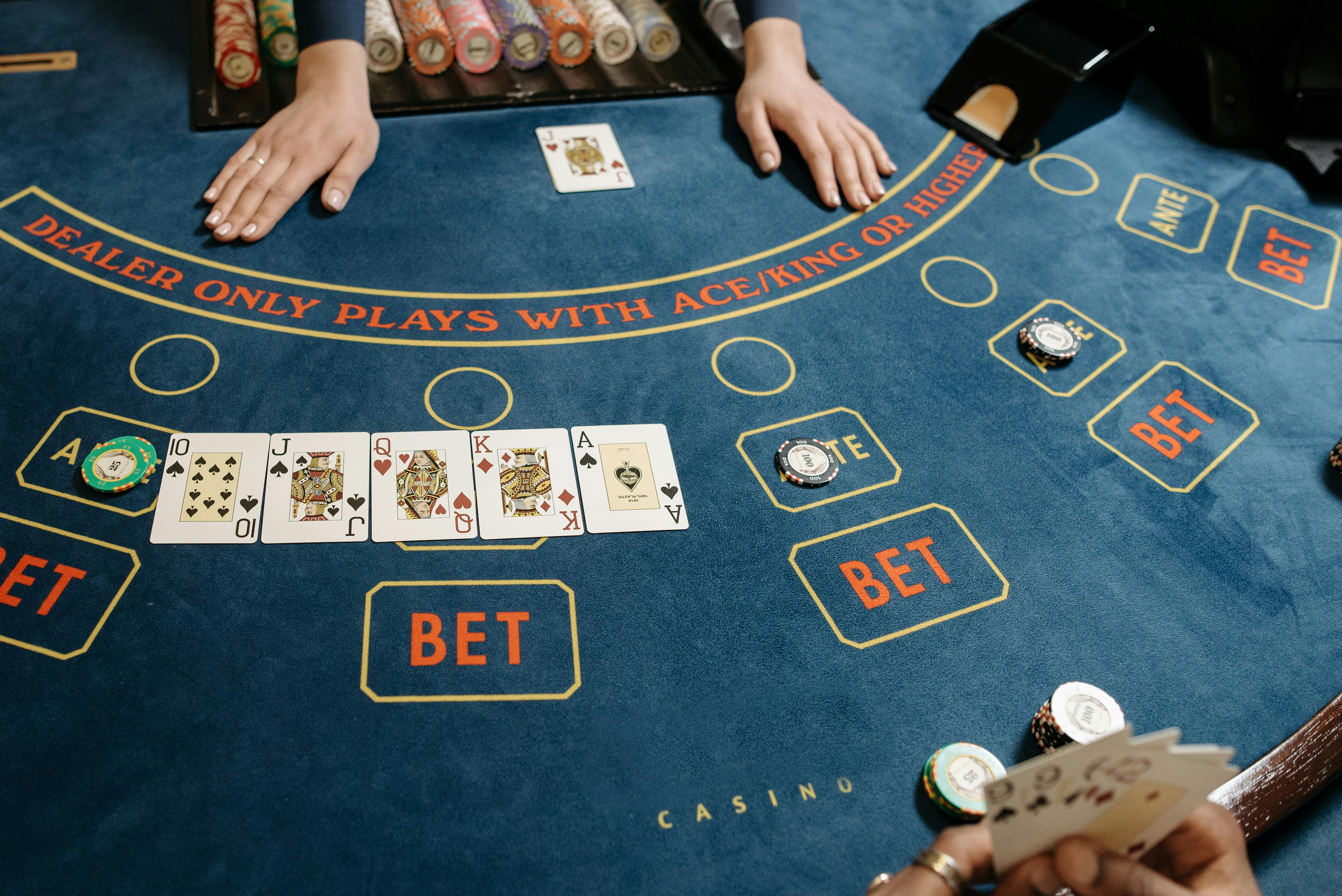
I spent about twenty minutes on a blackjack table before betting. That was probably sensible. The chat moved quickly, and the dealer was managing several players at once, yet the core action remained readable. The most useful feature was not flashy at all, it was simply the on-screen history. Looking back at previous outcomes does not predict the next hand, of course, but it helped me check that I had understood the result correctly.
Rules worth understanding before placing a bet
The old games are easy to learn at a surface level and surprisingly easy to misunderstand once real money is involved. I think that is why they remain popular. A player can sit down quickly, but better decisions require knowing what actually ends a round, what a tie means, and whether a side bet changes the value of a wager.
In blackjack, the aim is to beat the dealer without going above 21. Face cards count as ten, aces can count as one or eleven, and the dealer follows fixed drawing rules. Baccarat is even more restrained, as the player mainly chooses Player, Banker, or Tie while the drawing process follows preset rules. Roulette is visually more complicated, but its central idea is simple, place chips on possible outcomes before the wheel spins.
- Read the table limits first. A low advertised minimum may apply only to the main bet, while optional side bets have their own minimums.
- Open the rules panel. I did this even for blackjack, since payout rules, dealer soft-17 rules, and surrender availability can vary.
- Watch one or two rounds. It gave me time to see the timer, the chip controls, and the way the dealer announced decisions.
The basic rules panel is not just legal filler. It can change the entire value of a game. For example, blackjack tables paying 3:2 for a natural blackjack are generally more favorable to the player than tables paying 6:5. That difference looks small when the stakes are modest, but it matters over time. I had to remind myself that “classic blackjack” is not always exactly the same blackjack.
Odds, payouts, and the numbers behind the felt
Casino odds are not a promise about an individual round. They describe the long-run mathematical advantage held by the house. A result can go either way in the next few seconds, and a lucky streak can feel convincing, perhaps too convincing. Still, knowing the rough edge helps me choose a game based on more than the excitement of the layout.
| Game and typical wager | Approximate house edge | My practical takeaway |
|---|---|---|
| Blackjack, basic strategy, favorable rules | Around 0.5% or lower | Rule details and correct decisions matter a great deal. |
| Baccarat, Banker bet | Around 1.06% | Simple main bet, though commission rules should be checked. |
| European roulette, single-number zero wheel | Around 2.70% | Prefer it to double-zero roulette if both are available. |
| Baccarat, Tie bet | Usually above 14% | The payout is tempting, but I usually leave it alone. |
These numbers are approximate because exact rules differ from table to table. The house edge is useful as a comparison tool, not as a stopwatch for losses. A game with a lower edge can still produce a losing session. It simply gives up less, mathematically speaking, over a very long stretch of play.

Common mistakes I saw, and a few I nearly made
The biggest mistake is treating previous outcomes as instructions for the next one. A roulette board filled with red results can make black feel overdue. It is not. Each spin is independent, assuming a fair wheel. I know this in theory, yet seeing a long run of one color still creates a little pull in the stomach. That is exactly why I prefer to decide my bet size before the wheel starts moving.
- Chasing losses by immediately increasing the next stake.
- Choosing side bets because their payouts look dramatic.
- Ignoring blackjack rule variations and assuming every table pays the same.
- Playing too quickly because the live dealer timer feels like pressure.
I nearly made the last mistake on roulette. The countdown was not especially short, but I caught myself adding a second bet simply because there were a few seconds left. There was no real reason for it. That small moment made me pause. A bet should have a purpose before the timer creates one for you.
- Pick the game and the maximum amount I am willing to spend before joining a table.
- Use stakes that feel ordinary rather than exciting, which sounds dull but keeps decisions clearer.
- Take a short break after a run of wins or losses, because both can distort judgment in different ways.
There is no strategy that removes the casino advantage from roulette, baccarat, or standard blackjack. Basic strategy can reduce blackjack mistakes, and selecting lower-edge wagers is sensible, but gambling remains entertainment with risk. I prefer to think of a session budget as the price of that entertainment, not money that is meant to come back.
Why polished scripts can improve the player experience
At first, I assumed dealer scripts would make the experience feel less personal. Oddly, I came away feeling the opposite. When a dealer announces the same critical steps clearly every round, there is less room for confusion. In a game involving money, predictability is reassuring. The dealer does not need to be a comedian. I would rather hear a calm, precise instruction than a long improvised conversation while the betting window closes.
Kingjohnnie Casino’s classic-table atmosphere, at least from my time browsing it, worked best when it stayed traditional. The rules were still the main attraction. The polished presentation supported them instead of distracting from them. Some players may want constant visual effects and fast bonus mechanics. I am not entirely against that, but for blackjack or baccarat I prefer a clean screen, visible limits, and enough time to think.
Conclusion
Conclusion: my experience with Kingjohnnie Casino’s timeless table games was less about chasing a spectacular win and more about appreciating the structure. Blackjack rewarded attention to rules, baccarat reminded me that simple bets are often the sensible ones, and roulette was enjoyable when I resisted the urge to invent patterns. The dealer scripts, perhaps unexpectedly, added to that clarity. For anyone trying classic casino games online, I would start slowly, check the odds, avoid impulsive side bets, and only play with an amount that is comfortable to lose.